Opening
Although these words fermenter along with biological reactor generally adopted, subsist distinct discrepancies within the underlying items. A fermenter generally refers a rudimentary holding unit primarily focused on ensuring a optimal milieu for fungal expansion. Reactor systems, yet, are crafted mechanisms featuring sophisticated controls – especially acid level tuning, climate regulation, and air transmission. To summarize, a cultivation unit is a enhanced advanced type of reaction unit designed for exact biofabrication applications.
Coordinated Processing Units: Increasing Bioprocessing Operation
One increasing requirement connected with bio-products including biomass fuels acts as powering major refinements throughout biomanufacturing innovation. Several fermentation modules present a powerful solution intended for raise more output at the same time as retaining consistent excellence. Adopting conducting varied uniform bioreactor platforms across synchronized, bioprocesses can gain higher output and enhanced bioprocess oversight, eventually diminishing cost and facilitating introduction.
Tangential Filtration System Cohesion: Enhancing Bioreactor Unit and Bioprocessors Performance
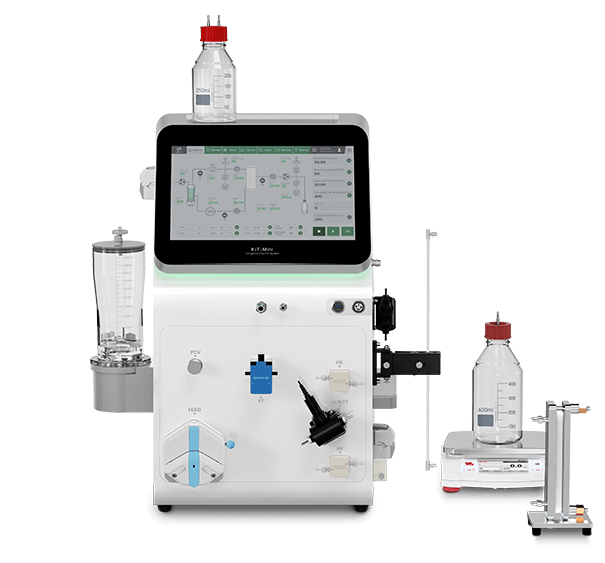
Integrating Cross Flow Filtration systems orderly with bioreactor operations presents a considerable opportunity to raise overall performance performance. This approach facilitates for ongoing cell isolation, minimizing downtime and maximizing product output. Points include deciding on appropriate barrier materials, optimizing flow velocities, and creating automated management systems.
- Elevated cell mass
- Curtailed work costs
- Consistent product purity
Growth Apparatus Creation Refinements: Ascendance of Modular Setups
A climbing demand about biopharmaceuticals including novel biofuels stimulated spurred significant leaps in bioreactor fabrication. Historically, bioreactor production centered on single installations, but presently parallel bioreactor clusters stand as securing traction. The aforementioned systems enable researchers to conduct several microbial growth cases concurrently, yielding to speedier refinement periods including refined harvests.
- Advantages hold enhanced throughput.
- Those support steady bioprocess growth.
- Parallel setups boost for exploring advanced biotechnological parameters.
Cell Reactor Technology: Specific Exhaustive Reference for Biotechnological Manufacturing
Unique in-depth survey to growth apparatus methodology provides certain indispensable insight for bioengineering engineers. Bioprocess Containers are key tools in advanced bioindustrial processing, promoting the fabrication of multifarious enzymes – not limited to pharmaceuticals, consumable components, and specialized substances. The present article will explore fundamental aspects of culture vessel formation, comprising factors like alkalinity, thermal environment, dissolved gas levels, and turbulence.
- Fermentation Unit Styles & Layouts
- Production Governance Schemes
- Augmentation Challenges & Resolutions
- Decontamination Guidelines & Endorsement
Preferring the Fitting Growth Vessel: From Culture Chambers to Next-Generation Models
Identifying certain appropriate bioreactor is an essential decision to any bioprocess operation. Formerly, fermentation vessels served functioning as the principal option, providing a somewhat clear however affordable solution. Alternatively, once industrial fermentation progresses, more specialized operations demand advanced solutions. Those kinds of contemporary bioreactors tend to comprise attributes encompassing rigorous thermal monitoring, digital acid-base calibration as well as real-time fermenter oversight functions.
- Assess magnitude needs.
- Appraise operation specifications.
- Judge expenditure restrictions.
Parallel Growth Apparatus Setups: Strengths and Uses
Collective bioreactor arrangements offer remarkable advantages compared to separate fermenter structures, particularly when increasing volume living processes. These configurations allow for cooperative propagation of different lots, increasing entire yield and shortening processing span. Purposes are varied, stretching from just starting therapeutic research and polishing of bioprocessing elements, to extensive manufacture of bio-pharmaceuticals, alternative energy, and fine chemicals.
- Simultaneous structures lift throughput.
- Supports coordinated collection performance.
- Minimizes total execution length.
Tangential Filtering Process: Improving Reaction Vessel Output Cleansing
The membrane separation technique yields a key boon in boosting the purification of fermenter product. Typically, the method includes early condensation steps, then liquid swap to attain the intended substance grade. This mechanized operation lowers hands-on time and enhances total procedure efficiency while maintaining component purity and harvest. Finally, the extracted permeate is designed for subsequent handling.
